
How to Find Reliable Baby Stroller Manufacturers in China for Wholesale & OEM/ODM Production
I. Clarify your requirements before sourcing
Sort out your core requirements before contacting suppliers, so you can quickly filter out mismatched manufacturers and greatly improve communication efficiency.
1. Clarify compliance standards for target markets
Market access requirements vary significantly across countries and regions. Compliance documents constitute core thresholds for overseas market entry.
- European Union Market: Must comply with EN 1888-1:2018+A1:2022 mechanical safety standard plus REACH Annex XVII phthalate restrictions. The factory shall issue a CE Declaration of Conformity (DoC) and maintain a complete Technical Construction File (TCF).
- United States Market: Subject to ASTM F833 stroller safety standard, 16 CFR Part 1227 federal regulation, and CPSIA lead and phthalate requirements. Test reports from CPSC accepted laboratories and a Children’s Product Certificate (CPC) are mandatory, alongside permanently marked tracking labels on the stroller frame.
- Australia & New Zealand Market: Governed by the AS/NZS 2088 series of safety standards. The latest valid Australian version is AS 2088:2022 including its 2024 amendments.
Important Reminder: Test reports are model specific and cannot be shared across different products. Some reports carry test item exemptions (e.g. excluding brake testing or marking assessment). Always double check the full test scope before placing orders to prevent overseas compliance risks.
2. Define product positioning and customization needs
Confirm key stroller parameters in advance: frame material (aluminum alloy / steel), maximum load capacity, folded dimension, overall unit weight, fabric workmanship and more. Meanwhile clarify your business mode: off the shelf wholesale, or OEM/ODM services including private label branding, modification, custom packaging and multi language user manuals.
3. Confirm commercial terms for cooperation
Clarify minimum order quantity (MOQ), sample lead time, mass production lead time, pricing terms (FOB / EXW etc.) and payment terms in advance to avoid subsequent disputes.
II. Main channels for locating qualified baby stroller manufacturers
1. B2B cross border platforms
Alibaba.com, Made-in-China.com and Global Sources are mainstream sourcing channels. Please note: platform verified supplier badges only represent platform membership status. They do not prove manufacturing capacity or product compliance, so further thorough verification is required.
2. Off line industry exhibitions
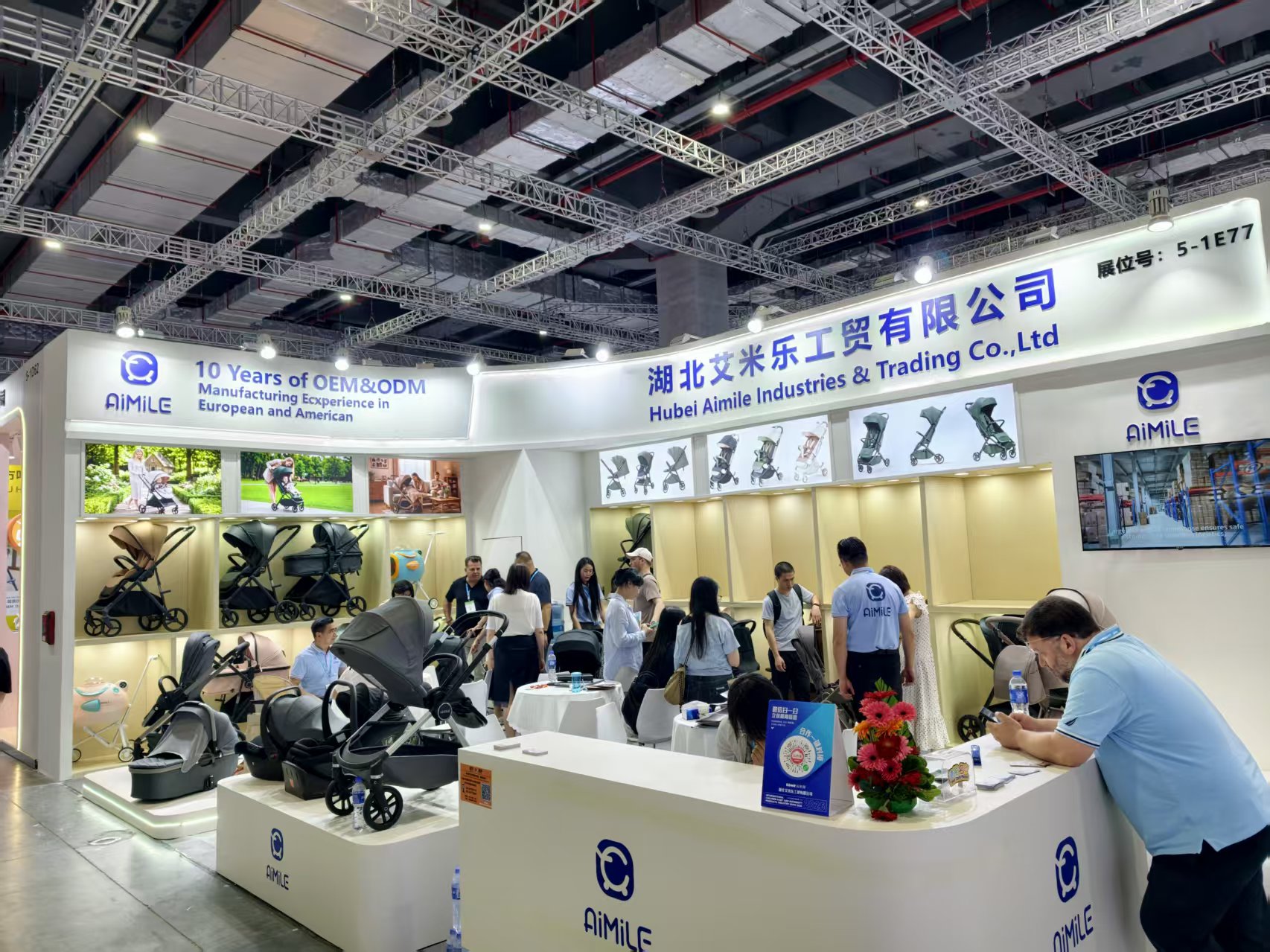
CBME Shanghai and Canton Fair are key childcare industry trade shows. You may inspect physical samples on site, compare workmanship quality and communicate directly with factory R&D and sales teams to screen qualified suppliers efficiently.
3. Official factory websites & industry referrals
Locate official factory websites via Google and other search engines. Recommendations from fellow baby product importers and brand owners are also highly credible sourcing channels with higher authenticity and stability.
III. Core identification: Real manufacturer vs trading company
One of the most frequent sourcing pitfalls is confusing trading companies with genuine manufacturers, which may result in unavailable customization, mismatched test reports and poor after sales support. You may distinguish them by the criteria below:
✅ Genuine Original Manufacturer
- Can provide on site workshop, production line and quality control station photos or videos; supports factory visits or virtual factory tours.
- Holds complete official test reports issued by TUV, BV, SGS and other laboratories under the factory’s own applicant name for full control over compliance documents.
- Possesses ODM/OEM capabilities including structural modification, fabric replacement, logo printing, packaging customization and new product R&D.
- Can answer professional technical questions precisely regarding frame structure, folding mechanisms, material specifications and manufacturing workmanship.
❌ Trading Company / Intermediary
- Offers broad, mixed product portfolios covering many unrelated childcare goods without focused core product lines.
- Cannot answer detailed technical questions and lacks modification, customization and R&D capabilities.
- Test reports are mostly issued under other factories’ names, and cannot be applied to your new projects, bringing high compliance risks.
IV. Mandatory qualification verification checklist for factories
Baby strollers belong to high safety priority products. Never place orders based on price alone. The following verifications are indispensable:
1. In depth verification of compliance test reports
Prioritize factories holding test reports issued by internationally recognized laboratories such as TÜV SÜD, Bureau Veritas and SGS. Focus on four key points:
- Report applicant: Must be the factory itself instead of an unrelated third party customer.
- Tested model: Must fully match the model you intend to purchase; cross model reuse of reports is invalid.
- Test scope: Review complete test clauses and watch for exemptions of critical items such as brake performance, marking evaluation and user manual assessment.
- Standard version: Confirm the adopted standard remains valid for your target market to avoid risks caused by outdated standards.
2. Production and quality control capacity verification
Verify workshops, injection molding stations, welding processes and assembly lines to confirm complete in house production workflows. Inspect quality control procedures including incoming material inspection, in process production patrol inspection and pre shipment final inspection to guarantee stable bulk product quality.
3. OEM & ODM capability verification for private label projects
For private label brand clients, confirm the factory can deliver full range customization services: fabric & canopy patterns, frame logo printing or embossing, retail color boxes, multi language warning labels, user manuals, minor structural adjustments and new product development.
V. Sample confirmation and risk avoidance tips for cooperation
- Sample confirmation prior to mass production: For all large volume orders, approve pre production samples first. Check appearance, functions, safety performance and compliance attributes before launching mass manufacturing.
- Reject abnormally low quotations: Prices far below market averages usually indicate downgraded materials, simplified workmanship or incomplete compliance testing, which will trigger severe overseas compliance and after sales risks.
- Formalize all requirements in written contracts: Record product specifications, compliance deliverables, lead times, MOQ, quality standards and after sales spare part policies within formal contracts.
- Third party pre shipment inspection recommended for large orders: Commission third party inspection agencies for bulk orders before shipment to minimize quality risks.
VI. Conclusion
Competent original baby stroller manufacturers deliver more than competitive pricing. Their core strengths lie in solid understanding of global compliance requirements, complete authoritative certification documentation, stable quality and comprehensive customization support.
Based in Hanchuan’s stroller industrial cluster, Hubei Aimile has completed third party testing via TÜV SÜD and Bureau Veritas for multiple core models. In real world projects, we frequently encounter buyers who receive test reports only to discover key clauses for brakes and marking assessment have been excluded. For this reason, we proactively share full report terms with clients to mitigate risks of customs detention, product recalls and financial penalties from the very beginning.
If you are seeking reliable baby stroller wholesale and OEM/ODM manufacturing services for EU, US, Australia New Zealand and other global markets, please feel free to contact us. You may apply for product samples, full compliance documents and detailed quotations free of charge.
What Stroller Fits Airplane? Cabin Size Travel Stroller
Related Article
IATA & Airline Guidelines
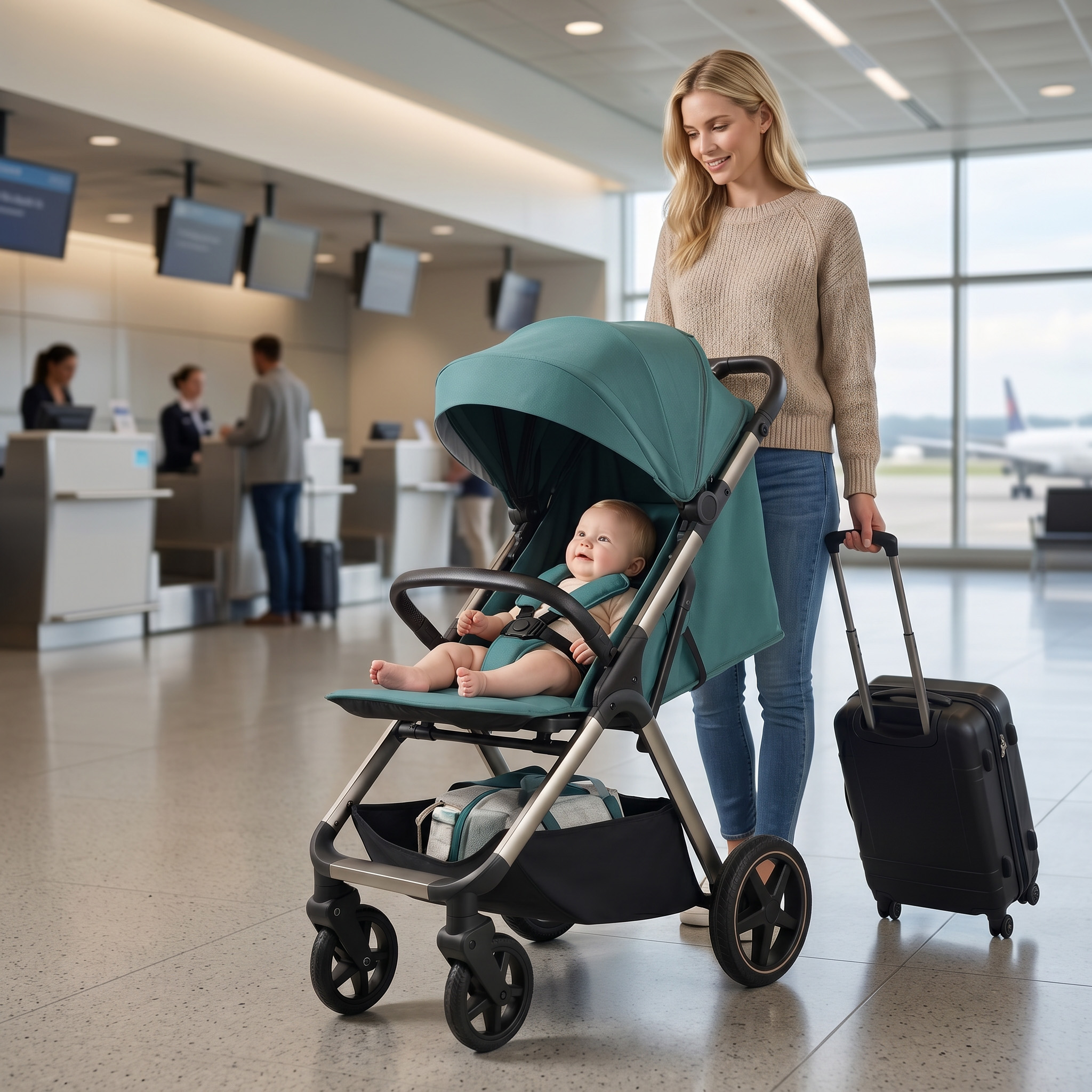
IATA recommended: 55×45×25 cm (L×W×H), ≤7 kg.
Common airline rules: Sum of dimensions ≤115 cm; must stow in overhead bin.
Always confirm with your airline; some budget carriers are stricter.